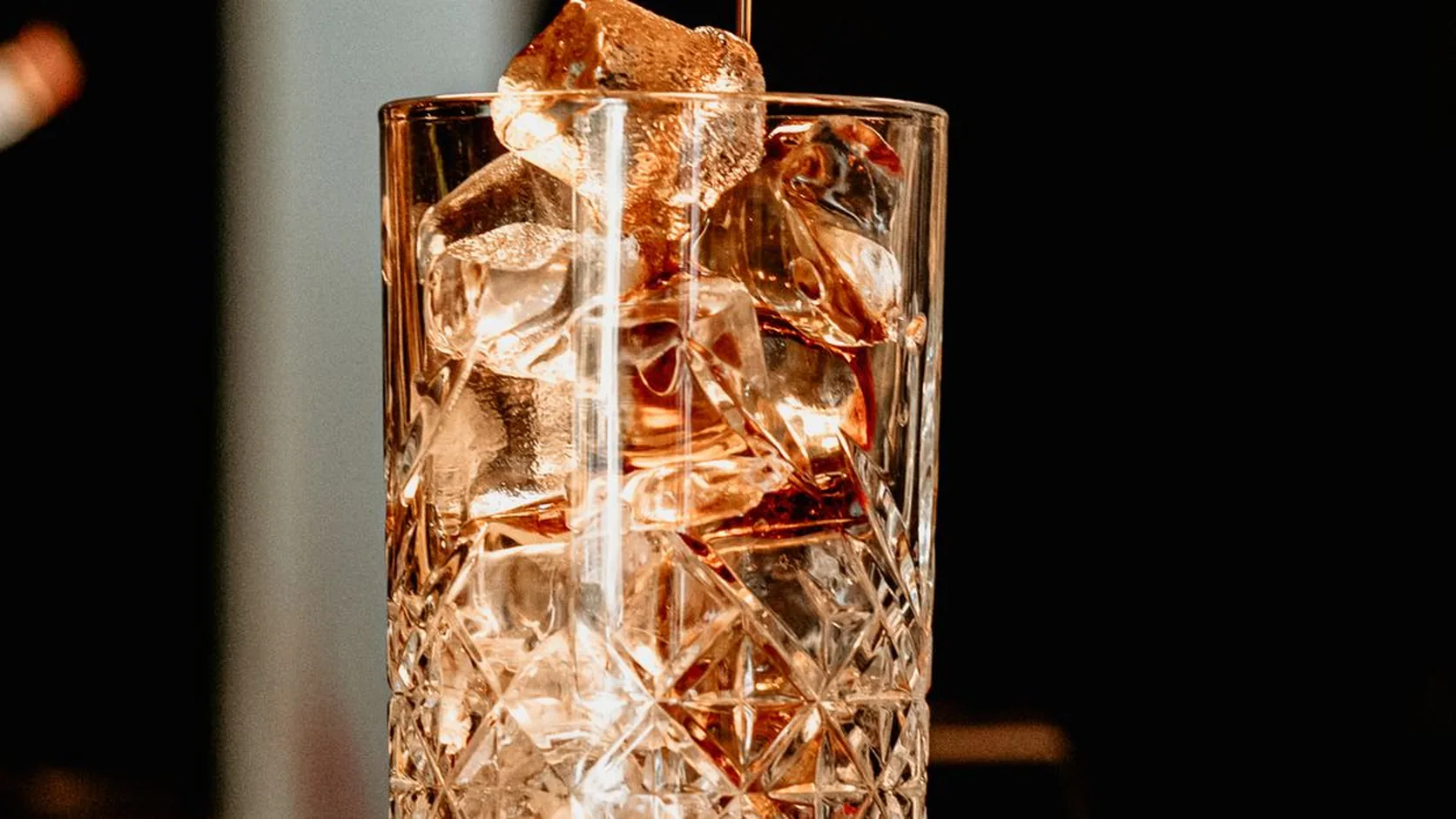
Order, rather than equipment, changes the results.
The reason a home-made highball becomes dull more easily than a drink at a bar is not because there is no expensive equipment. This is because the glass is warm, the amount of ice is small, and pouring carbonated water and stirring for a long time happen all at once. As highballs have simple ingredients, small differences in temperature and order are clearly visible. All you need is a tall glass, measuring tool, hard ice, and cold carbonated water to produce sufficiently stable results.
If you don't have a measuring tool, check the capacity of a small cup at home using water and a kitchen scale. 1g of water can be seen as approximately 1ml in home measuring, so it can be used repeatedly by marking the 45g point. A simple standard is much more effective than varying the amount each time.
Preparation order checklist
| order | to do | reason |
|---|---|---|
| 1 | Refrigerate carbonated water | Lower start-up temperature reduces air bubble loss and ice melting |
| 2 | Prepare a clean tall glass | Add enough ice and carbonated water and collect flavor. |
| 3 | Fill the glass to the top with ice | Reduces space for ice to move between ices and rapid dilution |
| 4 | whisky measuring | Enables reproduction of finished alcohol content and taste |
| 5 | Slowly add carbonated water at the end | Preserves air bubbles |
It is convenient to have a small bottle of carbonated water, close to the size of one glass. If you open and close a large bottle several times, the bubbles become weaker towards the last glass. There is no need to recommend the product. Carbonated water without added flavor or sugar is used as the standard, and flavored carbonated water is treated as a separate ingredient and the results are recorded.
The more ice there is, the less it can melt.
It's easy to think that more ice makes the drink more diluted, but solid ice filling a glass cools the liquid quickly and keeps the entire drink at a low temperature. Conversely, if you float just two or three pieces of ice, it will melt quickly to cool the warm glass and ingredients, and the ice will collide freely, adding water from the surface. The key is not the quantity of ice, but sufficient quantity and low temperature.
Ice with a freezer smell masks the delicate aroma of whisky. Freeze in airtight containers or replace old ice. Clear ice is not absolutely necessary, but hard-frozen ice with fewer bubbles and odors melts slowly and is easier to control. If the ice cubes are small, it is better to keep the glass colder and not take a long time to drink.
When looking at a glass, look at its capacity before its length.
A typical highball glass is long and has a relatively narrow mouth. However, at home, you can start with a clean glass of about 250 to 350 ml. Consider room for 45ml of whisky, 135ml of carbonated water, and ice. In a glass that is too small, it is difficult to add enough carbonated water, and in a glass that is too wide, you can feel the scent and bubbles spreading quickly.
There is no need to leave the glass in the freezer for a long time. You can lower the temperature of the glass wall by filling it with ice, stirring it for about 10 seconds, and discarding the melted water. Thin glasses are sensitive to temperature changes, so do not add ice right away when they are hot. After washing, cool to room temperature and completely remove moisture.
Three common failures at home
The first sip is good and soon becomes watery.
It is likely that the glass is not cold enough or that there is not enough ice in it. If you add both whisky and carbonated water and stir for a long time, dilution may have already occurred. For the next glass, cool the glass first, add carbonated water, and reduce the number of times you mix.
The taste is flat and has no scent.
Check for open sparkling water, a wide glass, and excess lemon juice. If the acidity is strong, it may not mean that the flavor has disappeared, but rather that the sweetness and malt of the whisky have been pushed back. Taste the basic combination again, excluding the lemon, and gradually add the scent of the peel.
It tastes different every time
It is difficult to find the cause if you do not measure any of the whisky amount, carbonated water amount, or glass size. At first, fix the recipe and record only the type of ice. Next, just change the carbonation ratio. The habit of changing things one at a time gives you more information than a dedicated machine.
Understand the alcohol content and drink slowly
Finished alcohol can be roughly calculated based on the amount and alcohol of whisky used and the final volume. 45ml of 40% whisky contains approximately 18ml of pure alcohol by volume. When the final volume including carbonated water and ice dilution is 210 to 240 ml, it is in the range of about 7.5 to 8.6%. This calculation is not a tool to predict how quickly your body processes alcohol. Even if it is the same cup, the effect varies depending on the individual's condition and speed. The basic rule is to drink water slowly with your meal.