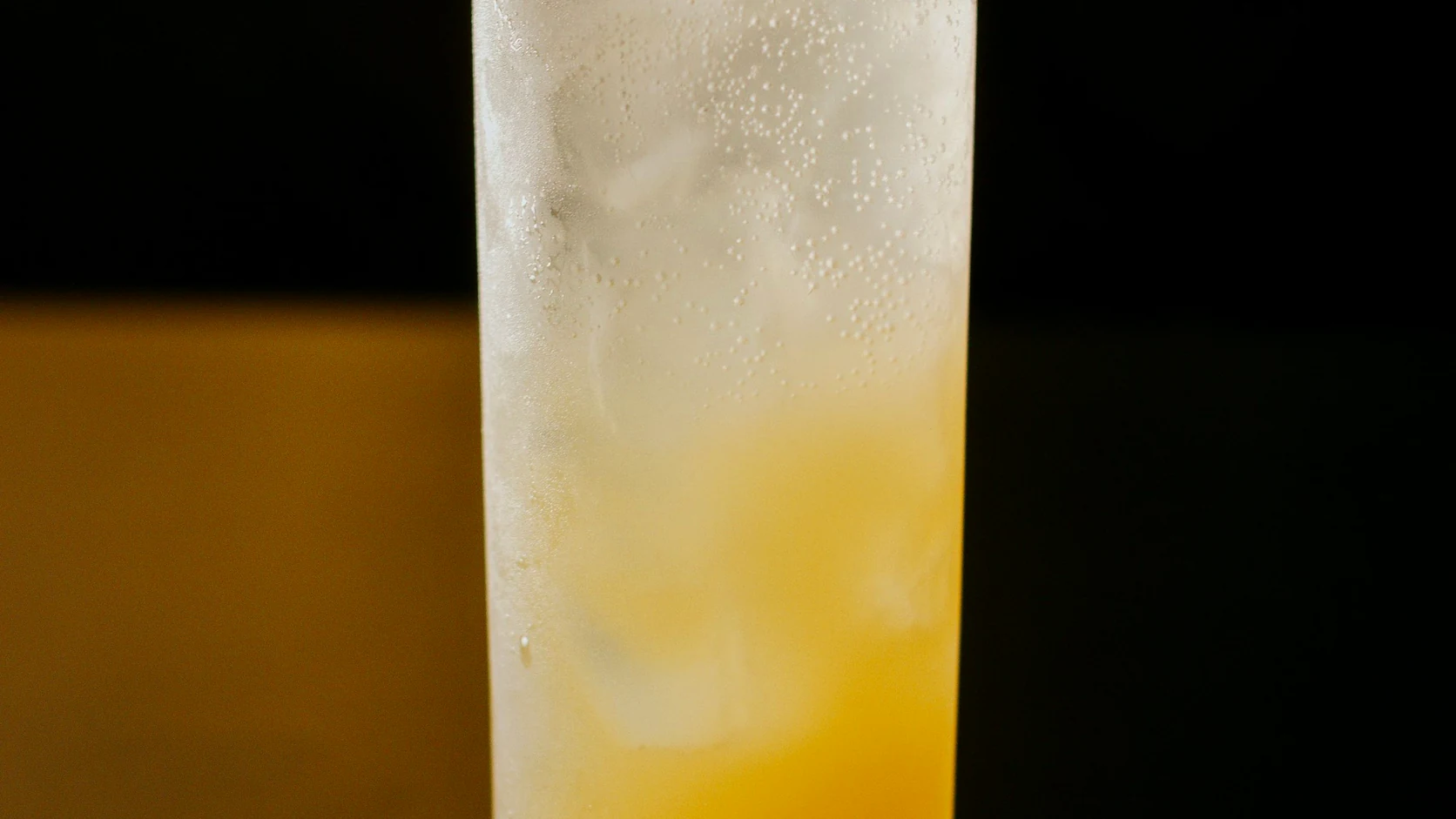
The golden ratio is not the answer but a starting point
1:3, commonly referred to in highballs, is a volume ratio of 1 whisky added to 3 carbonated water. If you mix 45ml of 40% whisky and 135ml of carbonated water, the calculated alcohol content before the ice melts is about 10%. In actual glasses, it is usually lower than that due to the addition of dissolved water during chilling and serving. Therefore, the completion rate of this document is expressed as approximately 7 to 9%. Results will vary depending on ice size, glass temperature, and drinking time, so numbers are not measurements but realistic ranges.
The reason 1:3 is a good starting point is because it is easy to clearly create the refreshing sensation of carbonation while leaving behind the scent of whisky. At 1:2, the malt and oak are clear, but the alcohol stimulation also increases. 1:4 is light and goes well with food, but the delicate flavor can fade quickly. It's easy to find the ratio that suits you by first making it 1:3 and then changing one element at a time.
| ratio | Calculated alcohol content before ice (based on 40% whisky) | impression | suitable situation |
|---|---|---|---|
| 1:2 | About 13.3% | Strong whisky aroma and texture | Light-flavored whisky, when drunk slowly |
| 1:3 | About 10% | Balance of flavor and carbonation | First baseline, most meals |
| 1:4 | About 8% | Light and refreshing | fatty foods, long meals |
Temperature is as important as ratio
Even if the ratio is the same, a lukewarm glass and a cold glass feel completely different. Cold liquids retain carbonic acid longer, and large pieces of ice have a smaller volume to surface area than smaller pieces of ice, so they melt more slowly. The process of filling a glass with ice, first stirring it to cool it, and discarding the resulting water is not a simple ritual. This is a method of simultaneously reducing the starting temperature and unnecessary first dilution.
Use carbonated water that has been sufficiently cooled in the refrigerator. If you pour room temperature carbonated water, the ice melts quickly and the bubbles are lost while the temperature is lowered. There is no need to even freeze the whisky. It is enough to briefly stir the whisky with ice to lower its temperature. Rather than making all ingredients cold, keeping the temperature of the glass and carbonated water constant helps with reproducibility.
Pour and stir to maintain carbonation
When carbonated water is poured from a high place onto the center of ice, air bubbles escape from the shock and expanded surface. Tilt the glass slightly or use a bar spoon to pour slowly along the wall of the glass. When mixing, do not draw circles multiple times. Since the whisky is already at the bottom and the carbonated water comes in from the top, all you have to do is place a spoon close to the bottom and lift the liquid once or twice.
When it comes to lemons, it is better to try the scent of the peel first rather than the juice. Juice can change the acidity and make the whisky sweeter. By lightly twisting the thinly peeled skin on a glass and adding oil, you can maintain the proportions and reveal the first impression of the scent. If it's a whisky with a lot of peat, start without lemon and see how the smoke and sea breeze open up in the carbonation.
How to fix each cause of failure
It's too bland
Before reducing the amount of carbonated water, be sure to check the dissolved water. If you combine small ice, a warm glass, and long stirring, 1:3 will feel thinner than 1:4. Make it again with large ice and a cold glass. If it is still weak, adjust the ratio to 1:2.5 in the next glass. The method of continuously pouring whisky into an already made glass makes it difficult to predict the balance of aroma and temperature.
Carbonation disappears quickly
Check the carbonated water temperature, pouring height, and number of stirring in order. A glass with an overly wide mouth can also give the impression that bubbles disappear quickly. If you open a new bottle of sparkling water and it is still weak, check to see if there is a lot of frost on the surface of the ice or detergent residue in the glass. Rough surfaces and residues create more space for bubbles to burst.
Only the scent of alcohol splatters
It may be a matter of temperature and whisky choice rather than ratio. If you use the same 45ml of high-alcohol whisky, the finished alcohol content will also increase. Cask strength starts by reducing the volume to 30ml or increasing the carbonation rate. Stir the ice and whisky briefly to make them cold enough and then add carbonated water to reduce the irritation that stings your nose.
The simplest way to record your ratios
Make the first glass in 45ml and 135ml, and next time, change the carbonated water in 15ml increments. If you change the whisky, ice, and glass at the same time, you won't know what has improved. It is sufficient to record the clarity of flavor, duration of carbonation, and balance with food as good, average, and disappointing, respectively. The golden ratio is not the same number for everyone, but it is my reference point that can be recreated under the same conditions.