[FLAVOR_WHEEL_IMAGE]
Not from the outside in, but from the inside out
The flavor wheel is not a flavor chart, but a map to find memories. First, pick a big category like fruits, flowers, grains, and peas, and then narrow it down to specific words like apple, lemon, raisin, and rose. If you try to guess the exact variety or dessert name from the beginning, it's easy to lose touch.
Record three times
1. Nose: Drop the glass slightly from your nose and take a short sniff. 2. Palate: Distinguish between sweetness, acidity, bitterness, texture, and alcohol stimulation. 3. Finish: Write down the type and length of scent that remains after swallowing.
Adding a few drops of water and repeating the same sequence can open up hidden scents or change the balance. Even if your words are different from others, it is not wrong. If lemon and grapefruit are different, you can first agree on the common category of citrus.
10 comparison axes of the Maker Game
[FLAVOR_AXIS_TABLE]
A practical order for reading one glass
Scanning every word on the wheel can make you imagine the list instead of smelling the whisky. Begin with broad contrasts such as light or heavy, bright or dark, sweet or dry. Choose one or two large families, then move outward. If fruit comes first, decide whether it feels fresh, cooked or dried before looking for apple, citrus or berries.
| Stage | Question | Example note |
|---|---|---|
| First impression | Is it light, rich, bright or dark? | Bright and fresh |
| Family | Which broad group arrives first? | Fruit and cereal |
| Detail | Fresh, cooked or dried? | Green apple, lemon peel |
| Change | What appears after water or time? | More honey and vanilla |
| Finish | What remains, and for how long? | Medium oak spice |
It becomes more useful in comparison
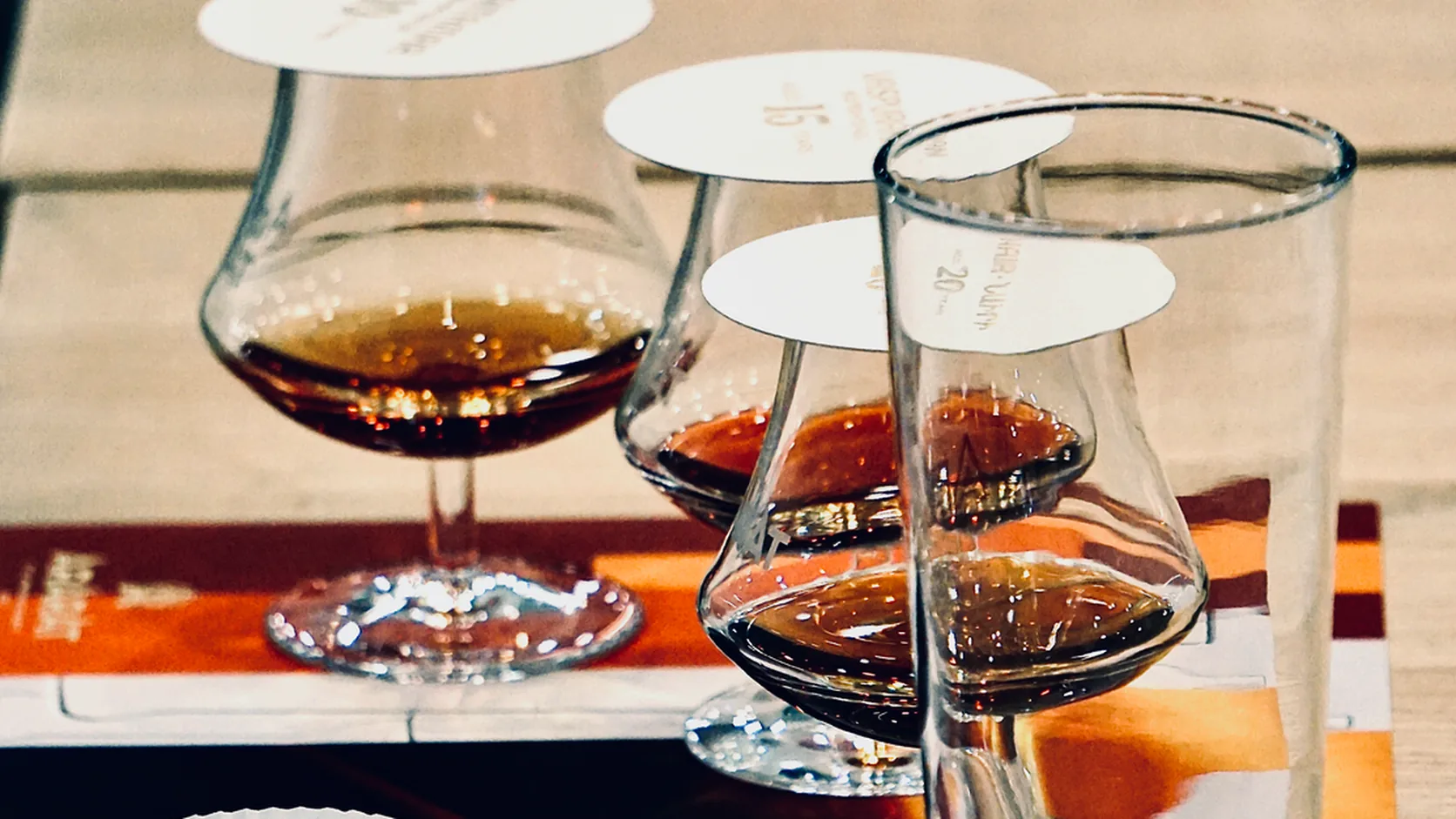
If one glass is difficult to describe, compare two small pours with clearly different styles: unpeated against peated, or bourbon-cask against sherry-cask. Keep glass shape, serving size and resting time similar. Record each glass separately before comparing intensity, so the louder whisky does not lend its vocabulary to the quieter one.
Common misunderstandings
Finding more words does not make a whisky better, and missing an official tasting note does not make your perception wrong. Colour can create expectations before nosing, while alcohol prickle may be confused with spice or peat. The Maker's ten axes are broad coordinates for comparing recipes; the outer words on the wheel are language for a tasting note. A high axis score does not guarantee every descriptor in that family.