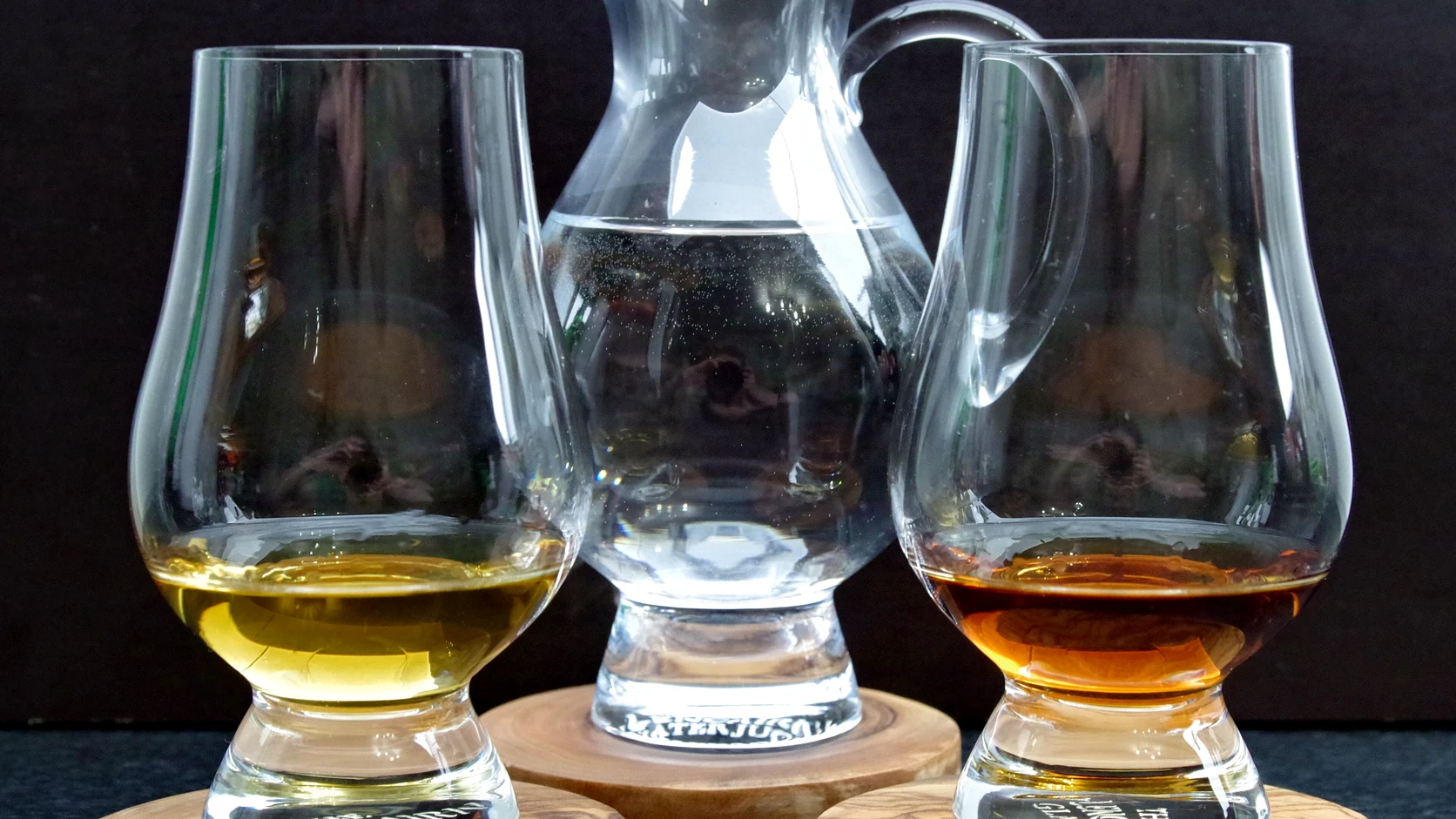
Rather than creating taste, the glass changes the conditions of experience.
Even with the same whisky, the distance you can smell it and the speed at which the liquid reaches your mouth vary depending on the mouth, body, height, and thickness of the glass. The glass does not create a new flavor that is not present in the whisky. The degree to which scents gather, the speed at which temperature changes, and the convenience of handling ice and carbonation vary, making it easier to perceive certain elements.
Glencaron's official product description explains that the wide bowl is great for seeing colors and smelling scents, and the narrow mouth is designed to collect scent. This tulip-shaped structure is advantageous for tasting, but it does not mean that it is the best glass for all situations. Tumblers and highball glasses are more practical when adding ice or making tall drinks.
| cup shape | What you're good at | Things that can be inconvenient |
|---|---|---|
| Tulip-shaped tasting glass | Concentrating scent, comparing small quantities, observing color | Not suitable for large ice and long drinks |
| Rock glass and tumbler | Big ice, Old Fashioned, easy drinking | Fragrance spreads quickly through wide opening |
| highball glass | Stay carbonated, drink long with ice | Difficult to compare the flavor of the concentrate in detail |
| substitute for wine glass | Incense can be collected and easily obtained. | Bowl size and glass thickness vary from product to product. |
Tulip-shaped glass: When comparing scents
A glass that is wide at the bottom and narrows at the top allows the volatilized scent to collect near the entrance. It is easy to check the scent without having to turn the glass too much, and it is good to observe the color and viscosity by pouring a small amount. When comparing multiple whiskeys under the same conditions, using the same glass can reduce the variable of glass shape.
However, if you put your nose deep inside the opening, the stimulation of high-proof alcohol may become stronger. Drop the glass a little and slowly approach it, slightly open your mouth, and take a brief sniff. When adding a few drops of water, first record the change in direction of addition.
Tasting glasses with short or no stems are stable, but if you cover the bowl with your hand for a long time, the temperature rises. Cold temperatures are not necessarily good, but if the temperature change during comparison is large, it is difficult to determine whether the difference is in scent or temperature. Hold the bottom or base of the glass and compare within the same time.
Tumbler: A glass with ice and a slow change.
A low, wide tumbler is great for adding large ice and is convenient for cocktails made by stirring in a glass, such as an Old Fashioned. The wide opening allows natural access to the nose and mouth and allows for comfortable drinking. Instead, the scent is not concentrated in a narrow spot, so in a detailed comparison, it may feel more dispersed than a tulip-shaped glass.
When drinking on the rocks, look at the size of the ice and the empty space in the glass. If the glass is too large, you may end up pouring more than necessary or the aroma may spread more widely. It is sufficient as long as one large piece of ice can fit comfortably and the scent can be smelled even after pouring a small amount of whisky.
A thick base feels secure in the hand, but it doesn't mean the quality of the whisky is good. Glass thickness and weight are a matter of usability. The priority is whether it is easy to clean and store, and the edges that touch the lips are not uncomfortable.
Highball glass: When maintaining carbonation and temperature
A long, narrow highball glass holds enough ice and carbonated water while keeping the liquid surface relatively narrow. It reduces the area through which carbonation escapes and makes it easier to pour ingredients slowly through long ice cubes. It is suitable for the purpose of drinking a cold, carbonated long drink rather than focusing on the scent of whisky concentrate.
If you have a bar spoon as long as the height of the glass, it is easy to adjust the concentration of the carbonation up and down without shaking it too much. If not, prepare clean chopsticks or a long spoon and move it gently once or twice. Chilling the glass in the refrigerator helps maintain initial carbonation, but follow the product instructions to avoid damaging the glass by freezing it rapidly in the freezer or pouring liquid with a large temperature difference.
If the glass is too narrow and large ice gets stuck, do not force it in. Broken ice increases the surface area, which leads to faster dilution and the risk of damaging the glass. Select the glass mouth and ice type together.
Alternatives when you don't have a dedicated glass
Small wine glasses have a bowl and a narrow mouth and can replace tasting glasses. A clean, unscented glass of water is sufficient as long as the comparison conditions are the same. What is important is not an expensive special glass, but a glass that is free from detergent odor and dust, has no cracks or chips, and allows you to check the amount you are drinking.
Paper cups or plastic cups with scent residue can make the whisky scent difficult to read. In situations where options are limited, such as outdoors, focus on drinking safely and slowly rather than comparing flavors. When comparing results by changing glasses, keep the same whisky, same amount, and similar temperature.
Check the capacity and weighing indications
The size of the glass does not equal the actual amount consumed. Even if you fill the bottom of a large glass a little, it may be more than you think, so first measure 30ml or 45ml with a jigger or measuring cup to check the height of your glass. Like the NHS' guide to calculating alcohol units, the amount and alcohol content of the drink should be viewed together.
In highballs, the amount of whisky contained does not disappear even if the overall alcohol content of the glass is lowered due to carbonated water. It is difficult to judge the amount of alcohol in a cocktail just by looking at the size of the finished glass. Check the amount and alcohol content of whisky in the recipe and drink it slowly with water.
Effect of cleaning and storage on scent
The smell of strongly scented detergents or dishcloths can be felt loudly in the glass. Rinse thoroughly with lukewarm water and wipe with a low-lint, odor-free cloth or dry naturally. Avoid sudden temperature changes, such as suddenly pouring hot water into a cold glass.
If the cabinet smells, rinse with water and dry completely before use. Check the rim for small chips and cracks and do not use damaged glasses. A clean and safe glass is more important than a beautiful glass.
If you choose just one for each purpose
A tulip-shaped glass is the most versatile to learn the scent of the concentrate and compare various products. If you often enjoy large ice cubes and Old Fashioned drinks, an appropriately sized tumbler is practical. If the focus is on a highball, choose a tall glass that will easily fit ice. If you have to do it all with one glass, you can start with a small wine glass or a water glass with a mouth that isn't too wide.
Choosing a glass is not a competition of equipment to prove your taste. If you divide 15ml of the same whisky into two types of glasses and write down the concentration of flavor, ease of drinking, and temperature change, you can find out the structure you need. There is no reason to rush to add a new glass if you barely notice any difference.