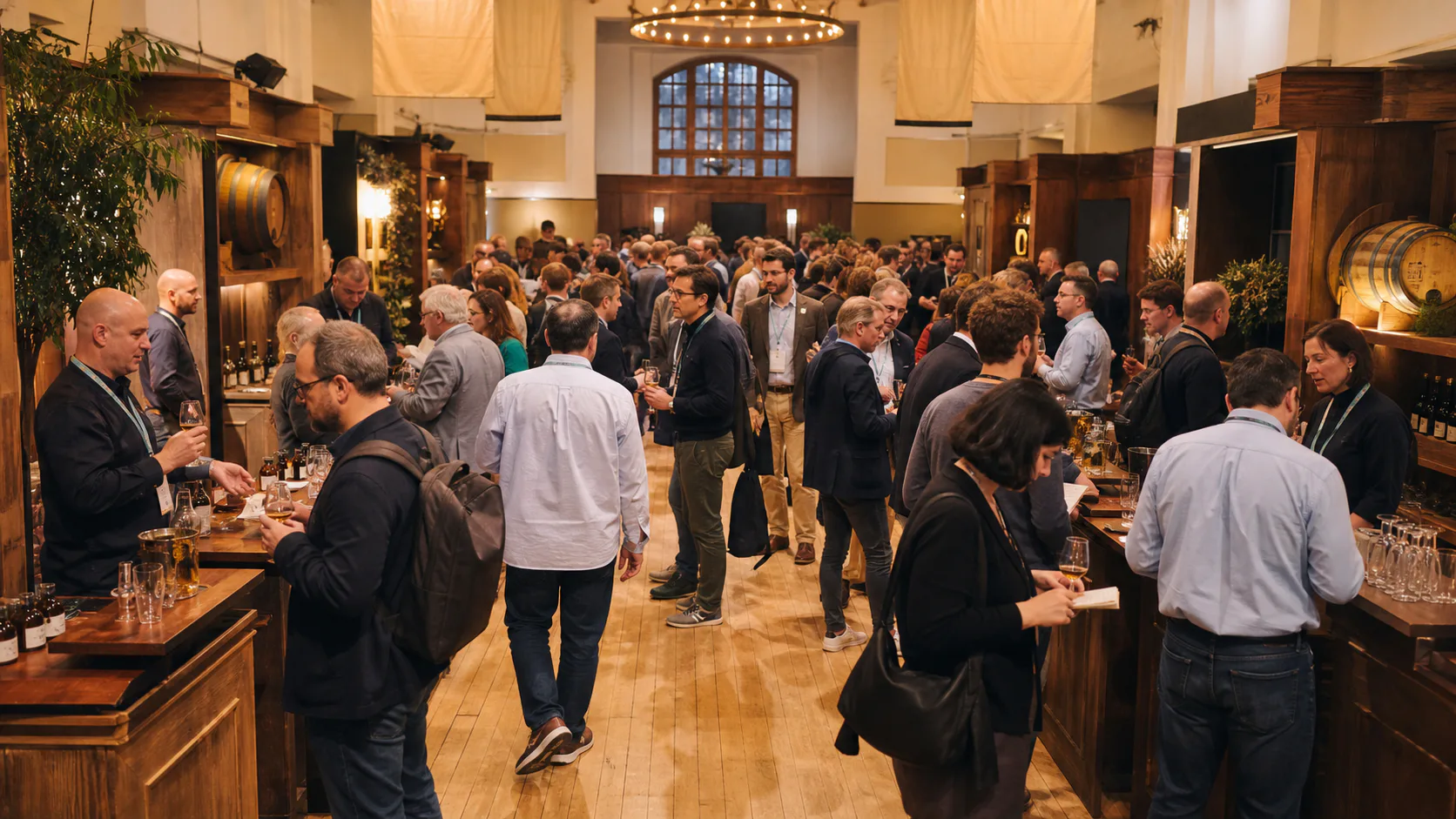
A festival is not a contest to drink the most
The value of a whisky festival is not the number of glasses emptied in a limited session. It is the chance to compare whiskies from different regions, raw materials and casks under similar conditions and to speak directly with makers. The flavour wheel becomes connected to real aromas, while assumptions about a preferred style can be tested in a concentrated comparison.
Preparation depends on the format. A regional festival spread across an island or production area is primarily a travel problem. Distillery open days depend on individual booking times. A hall filled with brands requires a route that manages flavour intensity and fatigue.
Regional festivals require a travel plan
Fèis Ìle celebrates both Islay whisky and island culture. Its official information makes an important distinction: visitors do not buy one pass that guarantees every tour and masterclass. Committee, distillery and partner events can have their own tickets. Reaching the island therefore does not automatically provide entry to every scheduled experience.
Spirit of Speyside is also not a single tasting in one building. Individual events take place in distilleries, village halls, whisky bars, historic buildings and outdoors. Its official guide specifically reminds visitors to allow travel time across Speyside. Rather than treating distilleries as a checklist, it is usually better to choose one area or theme for each day.
Distillery-led festivals reveal a producer in depth
Campbeltown Malts Festival illustrates a small whisky region in which distilleries run tours, warehouse tastings, talks and special releases. Springbank publishes future dates and mailing-list information on its official festival page. Ticket release dates and systems can change each year, so organiser emails and pages should take priority over unofficial calendars.
The strength of this format is the ability to compare a producer's new make, core range, older whisky and single casks as one story. If securing a famous limited bottle becomes the only goal, however, queues and stock determine the entire day. One warehouse tasting or conversation with a maker is often a better anchor for the visit.
Exhibition festivals make comparison efficient
An event such as Whisky Show London brings many producers and bottlers into one hall. Its official programme describes open tasting, stage sessions, masterclasses and specialist zones. With so many samples available, advance selection matters more, not less.
In Korea, Seoul Bar & Spirits Show is a broader exhibition covering whisky alongside rum, gin, tequila, cocktails and bar culture. It is not exclusively a whisky festival, but it offers access to importers, brands, bartenders and other spirit categories in one place. Once the official exhibitor list and programme appear, decide whether your aim is whisky comparison, cocktail culture or industry trends.
Recognising the format prevents booking mistakes
| Event format | Examples | Plan first |
|---|---|---|
| Regional circuit | Fèis Ìle, Spirit of Speyside | Accommodation, ferry or buses, individual event tickets |
| Distillery-centred week | Campbeltown Malts Festival | Open days, warehouse tastings, walking route |
| Large tasting exhibition | Whisky Show | Priority stands, masterclasses, breaks |
| Broad spirits and bar exhibition | Seoul Bar & Spirits Show | Exhibitors, programme, interests beyond whisky |
Dates, ticket inclusions and tasting rules change each year. Do not confirm flights and accommodation from an old blog calendar alone. Check the official event dates, mailing list, ticket terms and transport information in that order.
Arrange samples by flavour intensity
Do not begin simply with the first familiar bottle. Choose one question for the day: bourbon versus sherry cask texture, the relationship between peat level and taste, or how independent bottlers differ in cask selection. A focused theme makes a large hall easier to navigate.
Move broadly from lighter to heavier aromas, unpeated to peated whisky, and lower to higher strength. This reduces the chance that a powerful early sample masks a subtle later one. There is no need to finish every pour. Drink water regularly, schedule food and rest, and do not taste at all if you will drive.
Keep a comparison record, not a winner list
At a festival, comparative notes are more useful than polished tasting prose. Mark a few axes for each sample: fresh to dried fruit, light to heavy, sweet to dry, or clean smoke to ash and medicinal character. Ask makers about cask proportions, the role of the base spirit and what changed in the current batch rather than requesting a repetition of the marketing line.
Afterwards, record three outcomes instead of whether you bought a bottle: the style that differed most from expectation, the producer you want to revisit and the new axis discovered in your preferences. With that record, a festival becomes concentrated sensory learning rather than a consumption event.