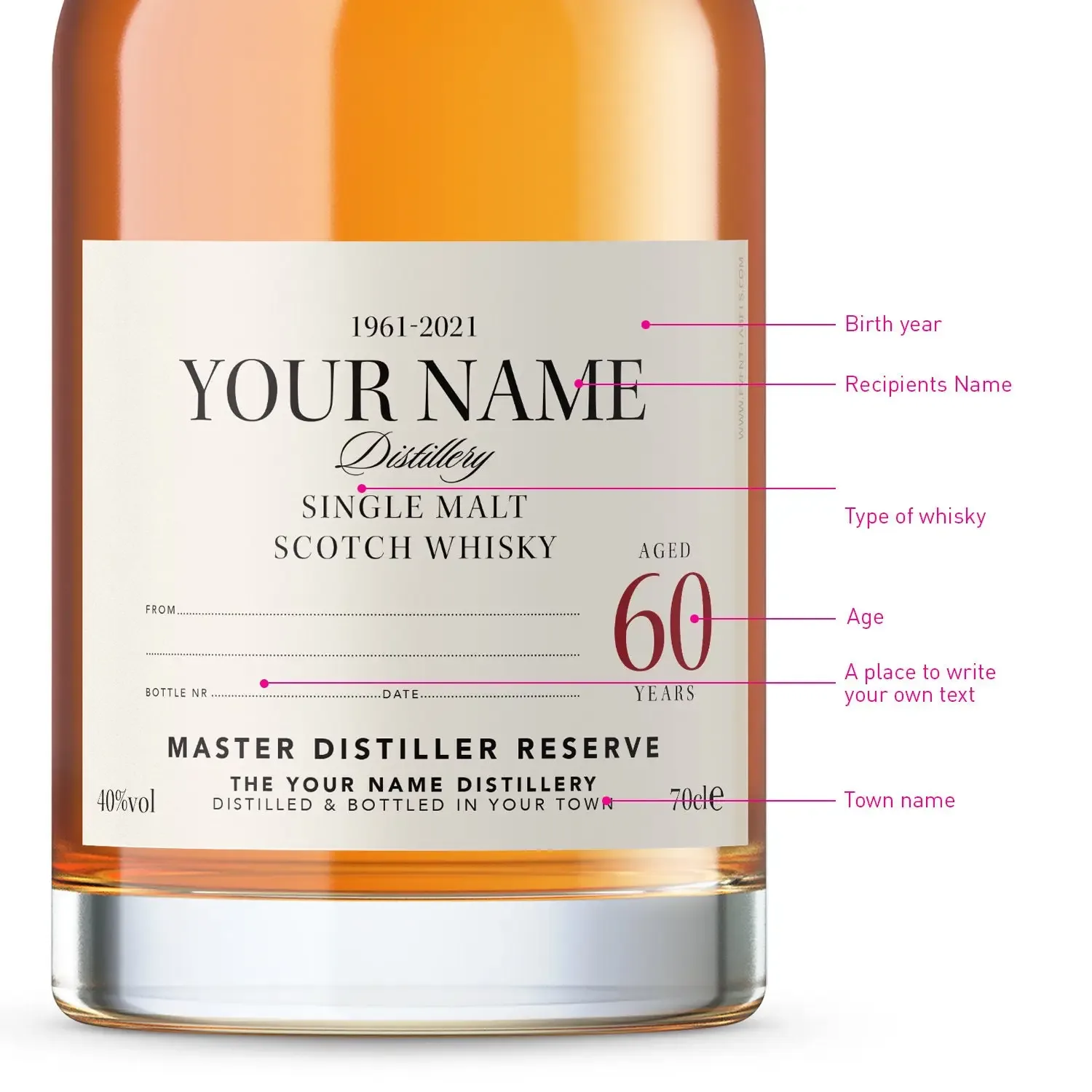
The most common mistake people make reading a whisky label at the shelf is trusting the biggest letters first. Big letters are usually the story the brand wants to tell. The information a buyer actually needs is smaller and scattered around it. The order below isn't a formula for ranking bottles — it's a way to make sure you don't miss what you're actually buying.
1. Find the legal category first
Before the bottle's name, look for the category and origin: Single Malt Scotch Whisky, Blended Scotch Whisky, Bourbon Whiskey. Single Malt Scotch means malted-barley Scotch made at one distillery — it does not mean it came from a single cask. Single Cask is separate information.
Don't read the region name as a quality seal either. Not every Islay whisky is heavily peated, and not every Speyside whisky is sweet. Region is only a starting point; the final flavour depends on distillation style, cask and batch.
2. Read strength and volume together
A higher ABV number isn't automatically a better score. 40%, 46% and cask strength each offer a different balance of aroma density, texture and how much room you have to add water. High-strength bottlings can taste harsh on the first sip, so it's worth considering how a few drops of water change things.
When comparing prices, look at volume too. Comparing a 500mL limited edition to a 700mL standard release by bottle price alone distorts the real cost. Dividing price by volume to get a per-100mL figure makes the comparison easier.
3. Read the age statement as the age of the youngest spirit
If a Scotch label carries an age statement, that number refers to the youngest whisky blended into the bottle — not the average age. A bottle labelled 12 years old can contain older spirit too, but the number never means the average.
A No Age Statement (NAS) product hasn't skipped the legal minimum either — Scotch whisky must mature for at least three years regardless. NAS simply means the producer chose not to foreground the exact age of the component spirits. Rather than assuming "no number means immature," it's more useful to read the cask composition and tasting notes the producer has published.
If you see a vintage year, check it alongside the bottling year or age statement. A vintage isn't decorative flavour text about "that year's mood" — it's information tied directly to the distillation date.
4. Read cask wording as a timeline
Matured in ex-bourbon casks describes the primary vessel. Finished in sherry casks means the spirit completed its primary maturation elsewhere, then moved to sherry casks for additional ageing. Double Cask or Double Matured can mean different things depending on the brand, so check the back label or the official product page to see whether it means two cask types blended together or moved through in sequence.
Don't let the cask name alone decide the flavour in your head, either. Even within "sherry cask," the wine type, oak species, and whether it's a first-fill or refill cask can change the result significantly. If the label doesn't give specifics, treat it as one clue rather than a guarantee of bold dried-fruit character.
5. Finally, check production style and who bottled it
Natural Colour, Non-Chill Filtered, cask numbers and bottle numbers describe a product's character — they aren't a quality grading scale. No added colour means the colour is natural; non-chill filtered means the whisky wasn't cold-filtered. Both can suit your taste, but neither automatically decides whether the whisky tastes good.
On an independent bottling, the bottler's name may appear larger than the distillery's. In that case, check the distillery, distillation year, bottling year, cask type, strength and bottle count line by line. A bottle that doesn't disclose the distillery can be a hidden gem, but it also means the buyer knows less about its origin.
A 30-second checklist for the shelf
- What is the category and origin?
- What are the strength and volume?
- How is the age, or the distillation/bottling year, shown?
- Is primary maturation separated from any finish?
- Who bottled it, and is there additional production information?
Once you've checked these five things, move on to the brand story and packaging. That way you're choosing based on the structure of what's actually in the glass, not just the biggest letters on the label.