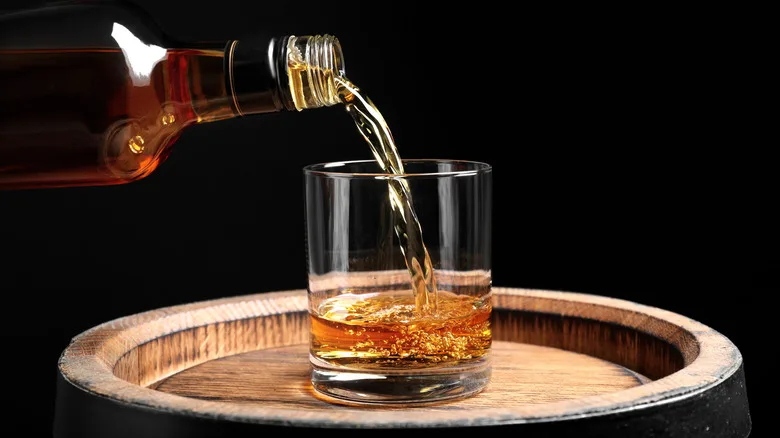
Wine has a well-known reputation for needing to be finished within days of opening, while whisky's high proof leads a lot of people to assume it's fine "basically forever." That's close to true for a sealed bottle — but once it's open, the picture changes a little. There's no hard expiry date, but how much is left in the bottle, and how it's stored, can gradually shift the aroma and flavour.
The key variable is how much air is left in the bottle
The more whisky you pour out, the more empty space — headspace — builds up inside the bottle. The oxygen in that space stays in contact with the whisky's surface, and over time that can gradually soften and flatten the aroma. A nearly full bottle has a small surface exposed to air, so change is slow; a bottle under half full changes noticeably faster. A commonly cited rule of thumb is to finish an opened bottle within six months to a year to enjoy its aroma and flavour at their best — less a hard rule than a practical target based on how air exposure accumulates over time.
Store it upright, not on its side
Wine is stored on its side to keep the cork from drying out, but whisky is the opposite — always store it upright. Whisky's high alcohol content can gradually erode a cork over time. Lay the bottle down and the cork stays in constant contact with the liquid, which can cause it to crumble and let air in rather than keeping it sealed. For long-term storage, occasionally tilting or gently turning the bottle to keep the cork moist is enough — there's no need to store it on its side.
Avoid direct sunlight and swings in temperature
Light — direct sunlight especially — can affect both colour and aroma, and a spot with frequent temperature swings isn't ideal either. A cupboard or pantry that stays relatively dark and at a steady temperature is generally recommended over a kitchen counter or a spot near a window. High humidity is also worth avoiding, since it can damage labels or corrode metal caps over time.
What to do once a bottle is getting low
Once a bottle drops below about a third full, it's worth thinking about ways to cut down air exposure. The simplest option is transferring what's left into a smaller, sealed container to shrink the headspace itself. If you tend to have several bottles open at once, working through the ones you drink most often first is one way to manage oxidation across the whole collection.
A quick storage checklist
- Stored upright, not on its side?
- Kept out of direct sunlight?
- Kept somewhere with a relatively steady temperature?
- If it's below half full, have you thought about reducing air exposure?
An opened bottle of whisky won't spoil overnight. But the vivid aroma you noticed the first time you opened it can fade gradually, so it's worth taking a little extra care with the bottles you care about most.