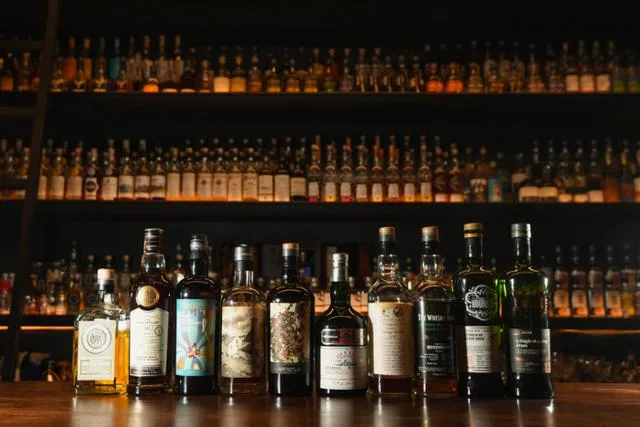
The appeal of an independent bottling is meeting a cask that differs from a distillery's own core range. At the same time, there may never be another batch under the same name, and it can differ a lot from the distillery style you already know. Reading the factual information on the label first — before the flashy tasting notes — reduces the chance of a disappointing buy.
1. Separate the distillery name from the bottler's name
The place that made the spirit and the company that bottled and released it can be different. Look for Distilled at and Bottled by separately on the label. Sometimes the distillery name is withheld entirely, replaced by just a region or a code. Contractual or trademark restrictions are often the reason a name is withheld, and that alone doesn't mean lower quality — but it does mean less information you can verify.
Watch for names that sound similar to real distilleries, too. A Scotch label must not mislead consumers into thinking it came from a distillery that doesn't actually exist. If a name is unfamiliar, check the bottler's official product page together with how it's categorised under Scotch labelling rules.
2. Use the distillation and bottling dates to work out the real age
When both a vintage and a bottling year are given, you can roughly work out the maturation period. Just note that without a month and day, simply subtracting the years may not match the exact age. If an official age statement is given separately on the label, treat that as the authoritative figure.
A Scotch age statement is based on the youngest spirit in the bottle. For a small batch blending several casks, that means the age of the youngest component — not the oldest cask used.
3. Rewrite the cask information as a single line
Look for the cask type, oak species, whether it's first-fill or refill, and the cask number, then rewrite them as one line — something like "refill bourbon hogshead, single cask #123." If it's a finished expression, separate the primary maturation from the finish.
Independent bottling labels tend to disclose cask information in more detail than most standard releases. Real-world bottlers explain each bottle's story through cask type, bottling date, strength, vintage and tasting notes. But more information doesn't automatically mean better flavour — it's a tool that sharpens your expectations and lets you compare afterwards.
4. Tell single cask and small batch apart
Single Cask shows off one cask's personality, but it also carries that cask's full batch variation as-is — it may differ from the typical flavour you liked in the distillery's standard release. Small Batch can combine a handful of casks for balance, but the wording alone doesn't always tell you exactly how many casks were used.
If what you're after is the rarity of a single cask, check whether a cask number and total bottle count are given. If what you're after is an easy-drinking balance, weight the bottler's batch description and tasting record more heavily than the words "single cask" themselves.
5. Look at strength and how much room there is to add water
Cask strength isn't simply shorthand for "no water added at all." It means close to the natural strength at the time of bottling, and the actual number can vary by cask and by duration. A higher strength gives you more room to shape aroma and texture, but drinking it neat isn't always the more balanced option.
When tasting, log the neat spirit first, then add water gradually. It's not "wrong" if your own glass diverges from the independent bottler's official notes. A single cask in particular can shift in impression depending on when the bottle was opened and how long the dram has rested in the glass.
6. Treat filtration and colour wording as preference information
Natural Colour and Non-Chill Filtered are details many independent-bottling enthusiasts look for. You can expect a less adjusted colour and texture, but a bottle without those phrases isn't automatically worse, and one with them isn't automatically better. What matters is whether you're willing to pay extra for natural colour, higher strength and a richer texture.
7. Check the trust structure, not just the tasting notes
Look up the same cask number and specifications on the bottler's official site, and check that they match what the retailer states. Even a vivid tasting note is a weak basis for buying if the actual specifications are missing. Conversely, even a brief aroma description is good for future comparison if the distillation date, bottling date, cask, strength and bottle count are all clearly given.
The higher the price, the safer it is to try a single dram first, or to try the same bottler's more affordable release to get a feel for their style. A scarce bottle creates pressure to buy before it sells out, but that isn't a reason to rush in without enough information.
Checklist right before you buy
- Who are the distillery and the bottler, respectively?
- What are the distillation date, bottling date, and official age statement?
- Are primary maturation and any finish clearly separated?
- Is it a single cask, or a batch blending several casks — and how many?
- Is there a cask number, bottle number, or total bottle count?
- Do the strength and the filtration/colour information suit your taste?
- Does the bottler's official information match the retailer's description?
The fun of independent bottling isn't only about getting a famous name for less. It's about discovering how differently a single cask and a specific bottling moment can turn out, even from the same distillery. Reading the facts on the label first lets you enjoy that difference as an adventure.