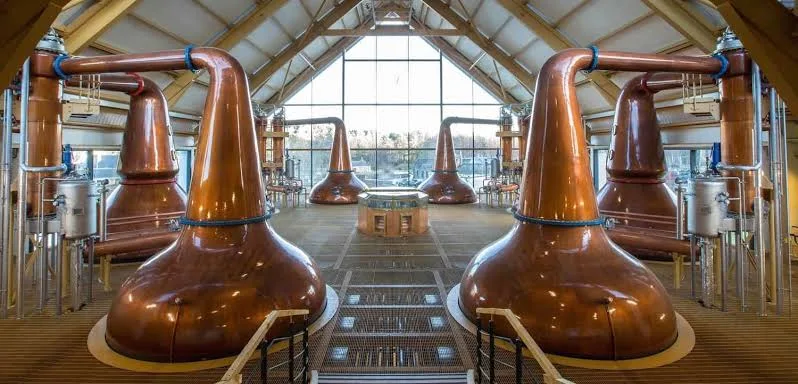
Under the same "single malt" label, you'll find small distilleries producing a barrel or two a day alongside large-scale operations running column stills around the clock. Neither approach is inherently better, but scale does tend to shape how a distillery approaches the spirit — and what ends up in the finished whisky.
Small distilleries: room to experiment
A small distillery typically runs one or two pot stills as a batch process. With lower volume, there's more room for the distiller to fine-tune variables like fermentation time, cut points, and cask combinations by hand. The emphasis often leans toward experimentation and developing a distinctive house style rather than standardisation, and even within a core range, subtle differences can show up from batch to batch. Worth keeping in mind, though: "small" or "craft" isn't a strictly defined legal term. Some bottlers that started small later blend in spirit sourced from elsewhere, so it's worth checking the actual distillery information rather than assuming production method from the word "craft" on a label alone.
Large distilleries: consistency at scale
A large distillery, often running column stills alongside pot stills, keeps multiple stills going continuously to produce far greater volume reliably. The goal is usually a consistent flavour that doesn't vary much from batch to batch, which typically means standardising fermentation and distillation conditions and blending multiple casks to balance the result. That can come across as prioritising predictable quality over individual character — but many large distilleries have also started releasing limited editions using unusual casks or non-standard ingredients alongside their core range, running experimentation and consistency side by side.
Scale isn't a quality score
A small distillery isn't automatically more refined, and a large one isn't automatically blander — that formula doesn't hold up. A small operation with inexperienced process control can end up with excessive batch variation, while a large distillery can still produce a distinctive core release built on decades of accumulated know-how. Scale tells you something about production approach and philosophy — it isn't a scale for ranking quality.
What's worth checking
- Is this distillery running a batch process (pot still), or does it include continuous distillation (column still)?
- Is this a core release, or an experimental limited edition?
- Is the spirit distilled in-house, or bottled from sourced spirit?
- Does "craft" on the label reflect actual production scale, or is it closer to marketing language?
Once you understand what scale actually implies, "small distillery" on a label reads less like a romantic image and more like a concrete indicator of production method and philosophy.